“As for me, all I know is that I know nothing.”
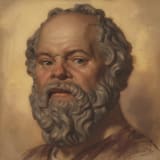 — Socrates · 470 – 399 BC
Source: Apology, 21d–22d (c. 399 BC) · Check the source
Disputed attributionWhat we know
- What is documented
- Scholarly evidence ties the idea to Plato’s Apology (especially around 21d–22d) where Socrates explains his relative ‘wisdom’ as awareness of ignorance.
- What remains uncertain
- The familiar modern wording is a later paraphrase; the exact phrase does not appear verbatim in Plato and its direct attribution is disputed.
Understanding the quote
This saying captures Socratic intellectual humility: true wisdom begins by recognizing what one does not know. The exact wording is a later condensation, but Plato’s Apology records Socrates’ claim that he’s wiser because he doesn’t pretend to know.
In the original · Ancient Greek
ἓν οἶδα ὅτι οὐδὲν οἶδα
The story behind it
Socrates left no writings; our picture of him comes mainly from Plato. The terse slogan is therefore a post‑Platonic shorthand, not a verbatim line from the dialogue.
Going further
- The era
- Around 399 BC, at Socrates’ trial in Athens, when public debates over virtue and authority were fierce.
- The thinking
- It advocates admitting ignorance as the starting point for inquiry: ask better questions, avoid false confidence, and learn more effectively.
- Key word
- Intellectual humility: deliberately recognizing the limits of your knowledge.
- Who quoted it
- The line became a common slogan in culture, education and media and even turns up in modern news and sports coverage.
Three challenges to live it
In the app, you pick the one that fits your day, and in the evening you say how it went.
Write three precise questions you don't know the answers to today, then add one sentence explaining why each question matters to you.
Saying 'I don't know' begins honest inquiry. Writing unknowns makes intellectual humility concrete and sparks the curiosity Socrates modeled.
Sit quietly for ten minutes with no agenda; notice every thought that claims certainty, acknowledge it, and let it pass without judgment.
Socrates warned against premature certainty. This mindful pause trains you to notice confident thoughts and release them so open inquiry can return.
Pick a recent belief and spend 20 minutes finding a credible source that challenges it; summarize the key evidence and note whether your view shifts.
Socrates championed critical examination. Actively seeking opposing evidence tests certainty and converts acknowledged ignorance into informed learning.
How does admitting what you don’t know change how you learn or decide?
Report an error
Does an attribution, a source or a translation look wrong? Tell us: every report is read, and the entry is corrected if needed.