“What doesn't hurt - is not life; what doesn't pass - is not happiness.”
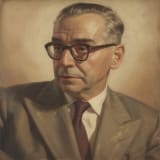 — Ivo Andrić · 1892 – 1975
Source: no specific work is documented · Check the source
Disputed attributionWhat we know
- What is documented
- The sentence is commonly attributed to Ivo Andrić and exists in South Slavic form in quotation collections, but no primary source has been located.
- What remains uncertain
- Attribution is disputed: researchers have not identified an original work, date, or translator for the English form; the exact origin remains unknown.
Understanding the quote
The line suggests that pain and transience are part of being alive: they don't undermine life or happiness but mark them as real. It echoes themes found in works linked to Ivo Andrić. Still, the sentence is commonly attributed to him without a verified primary source.
In the original · hr
Što ne boli – to nije život, što ne prolazi – to nije sreća.
The story behind it
Ivo Andrić won the Nobel Prize in Literature in 1961 — a fact often noted alongside quotations attributed to him.
Going further
- The era
- In 20th‑century Yugoslavia, writers like Andrić explored historical violence, memory, and daily endurance.
- The thinking
- Practical meaning: accept that joy and sorrow are temporary; valuing moments doesn't require their permanence, it requires presence and acceptance.
- Key word
- Impermanence: the idea that experiences change and do not last forever.
- Who quoted it
- The saying is reproduced in quotation databases, ECML materials for European Day of Languages, and tourism sites celebrating Andrić.
Three challenges to live it
In the app, you pick the one that fits your day, and in the evening you say how it went.
Write for 12 minutes about a painful memory that changed how you see life; don't edit, let details and feelings surface.
The quote ties pain to being alive: freewriting lets you accept a wound as real experience rather than failure. Putting it into words clarifies meaning.
Sit quietly for 6 minutes, focus on a present physical or emotional pain, observe its texture without judgment.
The line says pain belongs to life: a brief mindfulness practice helps you tolerate and recognize pain as a passing phenomenon rather than a permanent threat.
Make a mini artwork (drawing, collage, or three lines of verse) in 10 minutes inspired by a loss or painful passing; accept imperfection.
The quote links transience to happiness: shaping a loss into art makes the fleeting beauty of experience visible and helps integrate pain as a vital, meaningful part of life.
How does knowing a joy will end affect how you live it?
Report an error
Does an attribution, a source or a translation look wrong? Tell us: every report is read, and the entry is corrected if needed.