“There are things that are known, and things that are unknown, and in between, there are doors.”
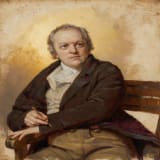 — William Blake · 1757 – 1827
Source: no specific work is documented · Check the source
Disputed attributionWhat we know
- What is documented
- Quote investigators report no evidence for this wording in Blake and trace a similar formulation to Ray Manzarek, cited in Newsweek (c.1967).
- What remains uncertain
- The attribution to Blake is likely apocryphal; similarity to Blake’s authentic «doors of perception» line seems to have encouraged the false credit.
Understanding the quote
The image of «doors» frames knowing as a threshold—what we perceive determines what we can know. The exact wording, however, is not found in Blake; it likely owes its form to later rock‑era paraphrases that echo Blake’s famous line about the doors of perception.
The story behind it
Quote researchers trace a very similar phrasing to Ray Manzarek of The Doors, cited in Newsweek in 1967, rather than to Blake himself.
Going further
- The era
- In c.1790 Blake wrote about perception and spiritual sight in The Marriage of Heaven and Hell.
- The thinking
- The point is simple: how you see things sets your limits. Practically, it means widening attention and challenging assumptions to discover more.
- Key word
- Doors of perception: the image for barriers between ordinary sight and deeper insight.
- Who quoted it
- Blake’s original line inspired Aldous Huxley’s The Doors of Perception and influenced Jim Morrison and The Doors, which helped the misattribution spread.
Three challenges to live it
In the app, you pick the one that fits your day, and in the evening you say how it went.
Write for 12 minutes about a mental “door” you’ve been avoiding: note what you know, what remains unknown, and one small step to open it today.
The quote frames thresholds between known and unknown; focused freewriting maps that threshold and turns curiosity into a concrete next step.
Sit by a window for 6 minutes and watch without judging, treating each passing sight as a “door” to the unknown; jot one new perception after.
Blake's doorway image asks for attention to thresholds; a short mindful observation trains tolerance for uncertainty and sparks new curiosity.
Make a small image or collage (paper or digital) of a door between the known and unknown; add a one-sentence caption stating the opening you hope for.
A door is a vivid metaphor; crafting a visual threshold externalizes fear and makes the desired direction tangible and actionable.
How do you open the doors between what you know and what you do not?
Report an error
Does an attribution, a source or a translation look wrong? Tell us: every report is read, and the entry is corrected if needed.