“In life, only death is certain. Everything else sways between the two shores of doubt.”
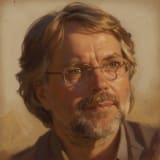 — Mia Couto · 1955 –
Source: A Varanda do Frangipani, 1996 · Check the source
Verified attributionWhat we know
- What is documented
- The wording is verified as by Mia Couto and is cited as coming from the novel A Varanda do Frangipani (1996).
- What remains uncertain
- Attribution is supported by secondary online catalogs but no edition page or chapter was located in the sources found.
Understanding the quote
The line pins one absolute — death — to show that everything living is shaped by shifting accounts and memories. In Couto's novel this idea underlies a polyphonic plot where truth emerges from clashing versions rather than from a single fixed fact.
In the original · Portuguese
Na vida só a morte é exacta. O resto balança nas duas margens da dúvida.
The story behind it
Mia Couto is Mozambican, born in Beira in 1955; he trained as a biologist and worked as a journalist before becoming a novelist.
Going further
- The era
- In 1996, soon after Mozambique's civil war, when society was rebuilding memory and identity.
- The thinking
- Couto blends oral traditions and fiction to show that knowing is about competing perspectives and storytelling, not absolute proofs.
- Key word
- Doubt: the idea that human realities are ambiguous and depend on who tells them.
- Who quoted it
- Widely reposted on digital quotation sites and social media, especially in contexts about grief and uncertainty.
Three challenges to live it
In the app, you pick the one that fits your day, and in the evening you say how it went.
Write one page comparing two opposing memories of the same event and note what each version reveals about your perception.
The quote shows truth shifting between accounts; this task reveals how your different narratives shape what you call reality.
Sit quietly for 10 minutes and let two contradictory images of the same memory arise without judgment; notice the emotions that come up.
The quote highlights narrative instability; this pause helps you witness multiple internal versions and accept uncertainty.
Make a collage (physical or digital) depicting the 'two shores' of a memory: one shore for what you assert, the other for what you doubt.
The shores metaphor asks for visual form; a collage makes tangible the coexistence and tension between competing versions of a memory.
How do the stories you inherit shape what you take for granted?
Report an error
Does an attribution, a source or a translation look wrong? Tell us: every report is read, and the entry is corrected if needed.