“The tree of life knows that, whatever happens, the warm music spinning around it will never stop. However much death may come, however much blood may flow, the music will dance men and women as long as the air breathes them and the land plows and loves them.”
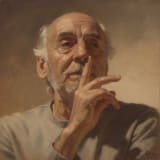 — Eduardo Galeano · 1940 – 2015
Source: Century of the Wind, conclusion (1986) · Check the source
Verified attributionWhat we know
- What is documented
- The wording is published at the end of Memory of Fire III (Century of the Wind); the quotation is reliably attributed to Eduardo Galeano.
- What remains uncertain
- Some online records miscite Open Veins of Latin America; minor transcription variants (breathes/breaths, plows/ploughs) also appear across editions.
Understanding the quote
Placed at the end of Galeano's final Memory of Fire volume, the image turns a catalogue of violence into a closing affirmation: the 'tree of life' stands for communal endurance and the 'warm music' for cultural survival that outlasts death and bloodshed. The line is from Memory of Fire III, Century of the Wind.
In the original · Spanish
El árbol de la vida sabe que, pase lo que pase, la música caliente que lo rodea jamás se detendrá. Por mucha muerte que venga, por mucha sangre que corra, la música hará bailar a las mujeres y a los hombres mientras el aire los respire y la tierra los sostenga y los ame.
The story behind it
Galeano was jailed and later exiled after Uruguay's 1973 coup; his hybrid of reportage and lyrical prose grew from first‑hand experience of repression and exile.
Going further
- The era
- In 1986, when Century of the Wind was published, many Latin American countries were emerging from dictatorships and political trauma.
- The thinking
- Galeano argues that keeping songs, stories and everyday practices alive is itself resistance. In practice that means remembering and acting so communities aren’t erased.
- Key word
- Historical memory: the practice of keeping collective stories alive to prevent forgetting and to sustain resistance.
- Who quoted it
- Writers and activists have reused the passage in essays on Afro‑Cuban music, land rights and cultural survival, where its ecological and social image resonates.
Three challenges to live it
In the app, you pick the one that fits your day, and in the evening you say how it went.
Write for 10 minutes about a song, story, or shared memory that has kept a community alive; describe how it resists violence and the passage of time.
Galeano's line presents music as cultural persistence; writing clarifies how a specific memory or song embodies that ongoing life.
Dance outdoors for 7–10 minutes to a traditional song or rhythm that connects you to communal roots; let your body respond without judgment.
Galeano speaks of music making people dance despite death; moving outside makes tangible the living continuity music represents.
Create today a small visual collage or a 6-track playlist that represents the 'music' and tree of life: images, sound clips, titles, memories.
Galeano blends image and music to signify cultural survival; assembling sounds and visuals makes the communal continuity he depicts tangible.
How does your community keep its stories and practices alive under pressure?
Report an error
Does an attribution, a source or a translation look wrong? Tell us: every report is read, and the entry is corrected if needed.