“Emancipate yourselves from mental slavery. None but ourselves can free our minds.”
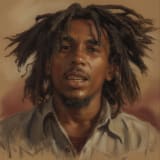 — Bob Marley · 1945 – 1981
Source: Redemption Song, Uprising (1980) · Check the source
Verified attributionWhat we know
- What is documented
- The line appears in Bob Marley’s song “Redemption Song” (Uprising, 1980); its core wording closely paraphrases Marcus Garvey's 1937 speech.
- What remains uncertain
- The commonly recorded lyric is singular ('yourself'); the plural form is a frequent variant. Marley adapted Garvey's formulation, but the exact route of influence is not fully documented.
Understanding the quote
This line compresses personal and political freedom into a single demand: sung by Bob Marley in “Redemption Song” (1980), it urges inner liberation as the necessary complement to ending physical oppression. The phrase echoes Marcus Garvey, blending Rastafarian spirituality with Pan‑African protest.
The story behind it
Recorded late in Marley’s life, the song is unusually spare—just acoustic guitar and voice—giving the lyric a hymn‑like clarity.
Going further
- The era
- In 1980, amid postcolonial debates and ongoing struggles for racial justice.
- The thinking
- It asks people to reject imposed ways of thinking and rebuild self‑respect and independent judgment, while still acknowledging collective action.
- Key word
- Mental slavery: accepting an oppressor's categories and limits as if they were natural.
- Who quoted it
- Johnny Cash and Joe Strummer covered the song, helping it reach non‑reggae audiences.
Three challenges to live it
In the app, you pick the one that fits your day, and in the evening you say how it went.
Write for 12 minutes about a recurring thought that holds you back: name it, trace its origin, and list three tiny actions to challenge it today.
Bob Marley calls for mental emancipation; focused writing reveals hidden constraints and creates concrete steps to loosen their grip.
Take a 6-minute pause: sit, breathe with a 4-4-6 rhythm (inhale, hold, exhale) and notice thoughts without judging or following them.
Mindful pauses reduce automatic thinking that Bob Marley calls mental slavery, creating the inner space needed to choose freedom.
Make a micro-art piece (a sketch, collage, or three-line text) that symbolizes a limiting belief you choose to release; place it where you'll see it today.
Creative expression externalizes internal chains. Bob Marley's call to free our minds becomes tangible when a belief is turned into an artwork you can confront and let go of.
How do you recognize and resist ideas that limit your freedom of thought?
Report an error
Does an attribution, a source or a translation look wrong? Tell us: every report is read, and the entry is corrected if needed.