“Beauty will save the world.”
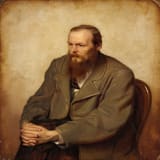 — Fyodor Dostoevsky · 1821 – 1881
Source: The Idiot, salon conversation (1867–1869) · Check the source
Verified attributionWhat we know
- What is documented
- The sentence is spoken by Prince Myshkin in The Idiot and appears in Dostoevsky’s text.
- What remains uncertain
- The wording is verified but the novel’s context makes its meaning contested: it’s a dramatic, qualified utterance rather than a simple authorial dictum.
Understanding the quote
Spoken by Prince Myshkin in The Idiot, the line proposes that a certain kind of beauty can jolt conscience and redirect human life toward goodness. It’s not a cheerleader slogan for pretty things: Dostoevsky embeds it in an ambiguous dialogue that presses what kind of beauty—moral, spiritual, or merely aesthetic—could "save" the world.
The story behind it
Dostoevsky’s notebooks mention the idea of two kinds of beauty, which helps explain why the line has been so widely reinterpreted and quoted out of context.
Going further
- The era
- In 1867–1869, amid debates on faith and nihilism, Dostoevsky placed this claim inside a salon scene of his great realist novel.
- The thinking
- Dostoevsky’s practical idea: beauty can awaken conscience, move people toward compassion, and inspire responsible action—not merely provide pleasure.
- Key word
- Beauty as redemption: the view that true beauty can awaken moral awareness and lead to transformation.
- Who quoted it
- The phrase appears across religious and cultural commentary and has been echoed by figures discussing art’s moral role, including references tied to Pope John Paul II.
Three challenges to live it
In the app, you pick the one that fits your day, and in the evening you say how it went.
Write for 12 minutes about a time when beauty (a person, an act, a scene) changed how you saw things or what you did.
Dostoevsky asks if beauty can jolt conscience; writing makes you identify a concrete moment when beauty redirected your choices.
Create in 20 minutes an image, collage, or short poem that makes visible the kind of “beauty” you think could save the world.
The novel presses what beauty might matter; making a small piece forces you to choose and clarify that vision visually or poetically.
Walk for 25 minutes, stopping three times to notice one detail (color, gesture, light) and write one sentence about each stop.
Dostoevsky links beauty and moral awakening; attentive walking sharpens perception and connects sensory noticing with responsibility.
How does your sense of beauty move you to act differently in daily life?
Report an error
Does an attribution, a source or a translation look wrong? Tell us: every report is read, and the entry is corrected if needed.