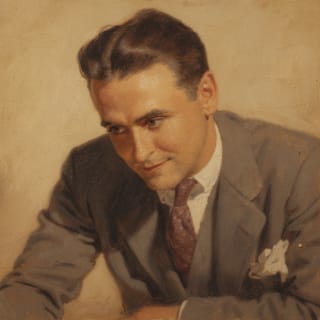
F. Scott Fitzgerald quotes
1896 – 1940 · United States, early 20th century (Jazz Age) · Novelist and short‑story writer
About F. Scott Fitzgerald
Born in 1896 in St. Paul, Minnesota, and died in 1940 in Hollywood, Fitzgerald wrote lyrical, socially observant fiction about ambition, reinvention and the limits of the American Dream. He and his wife Zelda became emblematic figures of 1920s culture.
Works: The Great Gatsby; This Side of Paradise; Tender Is the Night
Quotes
“For what it’s worth, it’s never too late to be whoever you want to be. I hope you live a life you’re proud of, and if you find you’re not, I hope you have the strength to start over again.”
Source: no specific work is documented · Check the source
MisattributedWhat we know
- What is documented
- Available evidence points to Eric Roth’s 2008 screenplay for The Curious Case of Benjamin Button as the origin of this wording, not to Fitzgerald’s published texts.
- What remains uncertain
- Widely circulated under Fitzgerald’s name, the quote appears to be a condensed or paraphrased version of a longer film monologue rather than a line from Fitzgerald himself.
This line celebrates intentional reinvention: the idea that you can choose who you become and begin again. Its popular wording, however, traces to the 2008 film screenplay for The Curious Case of Benjamin Button rather than Fitzgerald’s published works.
“I hope you make the best of it. And I hope you see things that startle you. I hope you feel things you never felt before. I hope you meet people with a different point of view. I hope you live a life you're proud of. If you find that you're not, I hope you have the strength to start all over again.”
Source: Benjamin Button, written by Eric Roth, The Curious Case of Benjamin Button (2008) · Check the source
MisattributedWhat we know
- What is documented
- The wording is recorded in the film’s script by Eric Roth and is spoken onscreen by the character Benjamin Button.
- What remains uncertain
- Common citations credit F. Scott Fitzgerald, but that attribution is apocryphal: the passage was written for the 2008 screenplay, not the 1922 story.
The lines are an appeal to personal reinvention and openness to new experience rather than a historical aphorism. They do not come from Fitzgerald’s 1922 story but from Eric Roth’s screenplay for The Curious Case of Benjamin Button (2008), where Benjamin reads them in a voice‑over letter. The passage frames life as improvable and restartable.