The quote that changes your day.
One quote. Your pace. Your way.
Every morning, a quote chosen for you — with its context, its story, and 3 concrete challenges — you choose the one that fits.
Each time you open Adagely, a quote is there for you. Its story. Its meaning. Ideas to explore. Read or listen. Come back whenever you like.
Something went wrong. Please try again.
Designed to feel right.
Adagely adapts to you — not the other way around.
Read or listen
Every quote comes with audio narration. Choose what feels right today.
Your pace, always
No streaks. No daily pressure. A new quote is ready whenever you are.
Calm by design
Clean interface. Gentle colours. No pop-ups, no flashing. Just the words that matter.
Explore, don't perform
Ideas to try, not tasks to complete. Pick what resonates, skip what doesn't.
You're in control
Choose your themes. Adagely adapts to your taste — you decide what inspires you.
Your journal, your words
A quiet space to note what struck you. No prompts, no templates. Just you.
- That moment when you open the app, read the daily quote, and close it three seconds later.
- That empty journal you stare at every night, telling yourself 'tomorrow'.
- That phrase supposed to change your life — but you've already forgotten it by noon.
Motivation apps
let you down.
And that's normal.
You deserve better than a quote on a sunset background.
You deserve a quote that fits you — and something to do with it today.
Your day with Adagely
How Adagely works
Morning, afternoon, evening — a routine that takes just a few minutes.
Three moments. Take one, two, or all three — it's up to you.
Morning
Your morning quote, chosen for you.
Every day at the time you choose — a verified quote, its historical context, its author, and its meaning explained. Plus audio narration for those who prefer to listen with their eyes closed.
“Life is too short to be little.”
Benjamin Disraeli · 1804–1881
During the day
3 concrete challenges. You pick yours.
No vague inspiration. 3 actionable challenges drawn directly from today's quote — you choose the one that fits your day.
Read this morning
“Be brave.”
The next day
“…”
Forgotten
Read this morning
“Life is too short to be little.”
See differently
Every small decision hides an opportunity to grow.
Daily challenges
Spend 5 minutes truly listening to someone without checking your phone.
A real impact
On your daily life, your vision, your life.
Evening
A few lines to anchor your day.
Did you rise to your challenge? A few lines to anchor the experience. And if the quote moved you, share it in one tap.
nmreed_
London, UK
312 likes
nmreed_ Today’s challenge on @adagely was to listen to someone for 5 minutes without touching your phone. At dinner, I put my phone face down. My girlfriend told me about something that had been bothering her for days. Usually I’d nod while scrolling. This time I really listened. At the end she said: “it’s been a while since you looked at me like that.” That hit me hard.
View all 84 comments
sarah_m tried this tonight, my son told me about his whole day for 10 min 🥹
alex.reed hardest part is not grabbing your phone when it buzzes
emma.w so simple yet so rare honestly 🥲
3 hours ago
Discover
A quote chosen for you.
Open the app whenever you like. A verified quote is waiting — with its author, its historical context, and its meaning explained. Read it or listen to it.
Explore
Ideas to try today.
Three concrete suggestions drawn from today's quote. Pick one that fits your day — or simply enjoy the quote as it is.
Reflect
A few words, if you feel like it.
Jot down what struck you in your journal. Or don't — the quote and your explorations are saved automatically.
Every quote, a masterpiece.
Every quote, fully explained.
Zero approximate quotes. Zero dubious sources. Every quote is verified, dated, contextualised — then enriched with its meaning, its history, and audio narration.
“All is alien to us, Lucilius — time alone is ours.”
Stoic philosopher, playwright, and advisor to Emperor Nero, Lucius Annaeus Seneca was one of the most influential moral voices of Roman Antiquity. Forced to take his own life by Nero in AD 65, he left behind a body of work of rare intellectual depth.
What it really means
Seneca isn't talking about time management. He's making a radical observation: everything we think we own — possessions, honours, reputation — actually belongs to others. Only time is irreducibly ours. And it's precisely what we most often let slip away.
Historical context
This sentence opens the very first letter of the Moral Letters to Lucilius (Ep. I.1), written between AD 62 and 65 — the last years of his life, after his withdrawal from Nero’s court. Seneca writes to Lucilius, a younger friend, as one speaks to someone one wants to save from wasted time. The letter opens with an injunction: “vindica te tibi” — reclaim yourself.
In other languages
Latin
original“Omnia, Lucili, aliena sunt, tempus tantum nostrum est.”
Ep. Morales I.1
French
“Tout nous est étranger, Lucilius — le temps seul nous appartient.”
Trad. française classique
The exact quote
Verified, dated, sourced with certainty.
The author & their era
Their life, historical context, and what led them to this thought.
The meaning decoded
What the quote truly means — not a generic interpretation.
The context of creation
When, where, and under what circumstances the thought was born — and how it crossed the centuries.
The original & its translations
Because a translation is already an interpretation — reading the original means hearing the thought as it was first expressed.
Read or listen
Audio narration for mornings when you prefer to close your eyes.
On the shoulders of giants
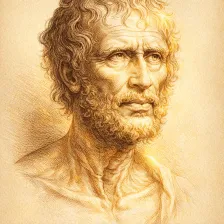


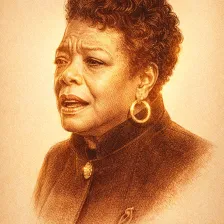




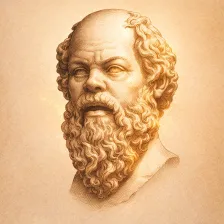







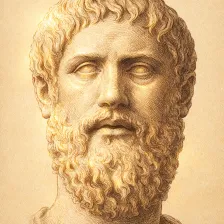
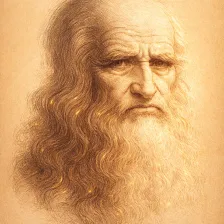
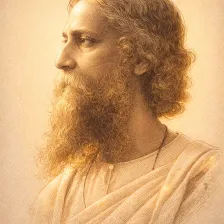

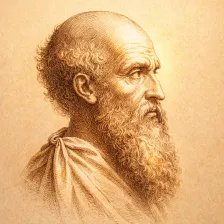

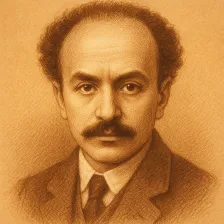

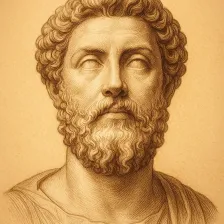
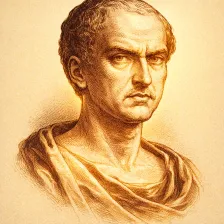


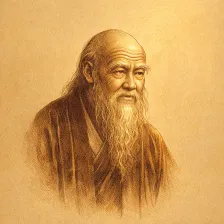



Seneca
c. 4 BC – AD 65

Shakespeare
1564–1616

Nietzsche
1844–1900

Maya Angelou
1928–2014

Confucius
551–479 BC

Voltaire
1694–1778

Virginia Woolf
1882–1941

Rumi
1207–1273
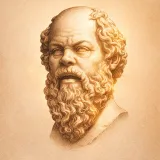
Socrates
470–399 BC

Montaigne
1533–1592

Albert Einstein
1879–1955

Audre Lorde
1934–1992

Buddha
c. 563–483 BC

Blaise Pascal
1623–1662

Rilke
1875–1926

Hannah Arendt
1906–1975
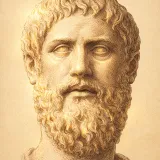
Plato
428–348 BC

Leonardo da Vinci
1452–1519
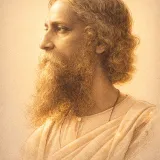
Rabindranath Tagore
1861–1941

Nelson Mandela
1918–2013
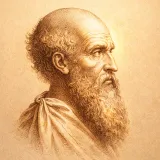
Epictetus
c. 50–135

Hildegard of Bingen
1098–1179

Kahlil Gibran
1883–1931

Albert Camus
1913–1960
Marcus Aurelius
121–180
Boethius
480–524

Goethe
1749–1832

Martin Luther King Jr.
1929–1968
Lao Tzu
6th–5th c. BC

Simone Weil
1909–1943

Viktor Frankl
1905–1997

Toni Morrison
1931–2019
Adagely knows you.
A little better each day.
Adagely adapts to your taste.
Adagely selects your quote based on your tastes, your reading history, and your journal. The more you use it, the better it understands you.
Choose the themes that interest you. The more you explore, the better Adagely understands what resonates with you. You stay in control.
-
Your themes
Stoicism, Psychology, Literature, History and many more — you choose what inspires you.
-
Your memory
What moves you, what makes you react — Adagely remembers.
-
Your path
Challenges that feel like you — and that, day after day, shift how you see the world.
Your themes
Stoicism, Psychology, Literature, History and many more — pick what draws you in.
Quiet suggestions
Adagely notices what you enjoy — no tracking, no pressure. Just better suggestions over time.
Explorations at your pace
Multi-day series you can take over days or weeks. Pause and resume anytime.
Go deeper.
Adagely courses.
Go deeper. At your own pace.
Not a list of quotes. A journey that ends with a portrait of you.
The art of overcoming adversity
The art of navigating adversity
How great thinkers turned suffering into fuel. Not to deny it — to walk through it.
How great thinkers turned difficulty into understanding. Take it over days or weeks — there is no deadline.
Epictetus · Boethius · Montaigne · Nietzsche · Viktor Frankl
Course preview
“When facing adversity, you tend to…”
What freedom really means
“Do you feel free in your current life?”
Building a life that matters
“What gives you the most meaning right now is…”
For each quote in the course
The quote
Verified, contextualised, explained and listenable — connected to the course's theme.
Its insight
How this thought specifically illuminates the topic — an angle of reflection different from the general explanation.
Your questions
3 questions to situate yourself. Not a quiz — an invitation to take a stand and know yourself.
At the end of a course
Your portrait.
“You face adversity with a Stoic tendency: you look for the lesson, not the emergency exit. Your resilience is active — you transform, you don’t endure.”
Your 3 concrete actions
-
Identify a constraint in your life that you can't change — and write down what it has taught you.
-
Reread a quote from this course every morning for 7 days.
-
Share this portrait with someone whose way of facing hardship you admire.
The entire course and your answers are added to your journal — a record of your reflection, accessible at any time.
And also
Also included
Be among the first.
Like what you see? Leave your email.
Adagely is coming soon. Leave your email to be notified before everyone else.
You're on the list!
We'll notify you first. We'll let you know when Adagely is ready.
Something went wrong. Please try again.